Every day, millions of households throw away vegetable peels, fruit scraps, tea bags, and other kitchen waste—without realizing that these could become nutrient-rich compost for their gardens. As landfills continue to overflow and climate change worsens, finding sustainable ways to manage kitchen waste is more important than ever.
In this article, you’ll learn:
- What kitchen waste composting is
- Why it matters for the environment
- How to start composting at home
- Best compost bins for beginners
👉 Let’s discover how a small habit in your kitchen can lead to a big impact on the planet.
Why Choose Kitchen Waste Composting?
Kitchen waste composting is an easy and effective way to reduce your household waste while creating natural fertilizer for your garden or plants.
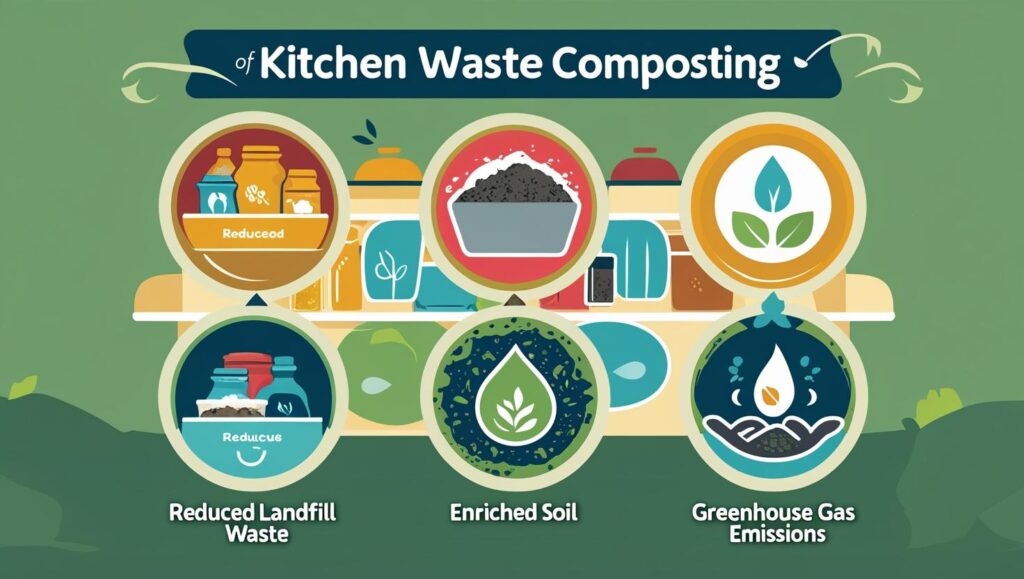
Key Benefits of Composting Kitchen Waste:
- ♻️ Reduces landfill waste
Organic waste in landfills creates methane—a harmful greenhouse gas. - 🌱 Improves soil health
Compost is full of nutrients and beneficial microbes that enhance plant growth. - 💸 Saves money
You don’t need to buy chemical fertilizers when you make your own compost. - 🌍 Eco-friendly lifestyle
Composting is a core part of a zero-waste or sustainable home.
Top 5 Compost Bins for Kitchen Waste (2025)
If you’re serious about starting your composting journey, here are some beginner-friendly compost bins for kitchens:
1. Vitamix FoodCycler FC-50
- Features: Electric composter, odorless, quick processing
- Pros: Compact, fast (4-8 hours), minimal effort
- Cons: Higher price point
- CTA: Ideal for apartment dwellers and busy families.
2. Bamboozle Compost Bin
- Features: Made from bamboo fiber, stylish design
- Pros: Lightweight, eco-friendly material
- Cons: Not for outdoor composting
- CTA: Best for countertop compost collection.
3. Utopia Kitchen Compost Bin
- Features: Stainless steel, carbon filter to control odor
- Pros: Affordable, durable
- Cons: Needs manual emptying into outdoor composter
- CTA: Perfect for beginners looking to reduce food waste.
4. Lomi Smart Composter
- Features: Smart electric composter, turns food waste into dirt
- Pros: Fast, stylish, energy efficient
- Cons: Expensive
- CTA: Ideal for tech-savvy, eco-conscious users.
5. Full Circle Fresh Air Compost Collector
- Features: Ventilated design, reduces odor naturally
- Pros: Inexpensive, simple to use
- Cons: Not suitable for large families
- CTA: Great for single or small households.
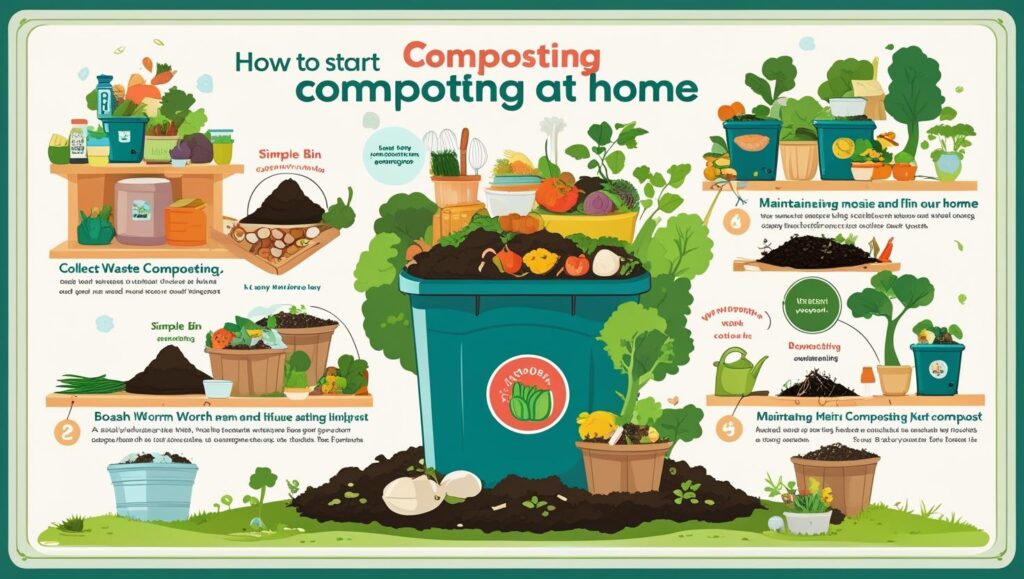
How to Start Composting Kitchen Waste at Home
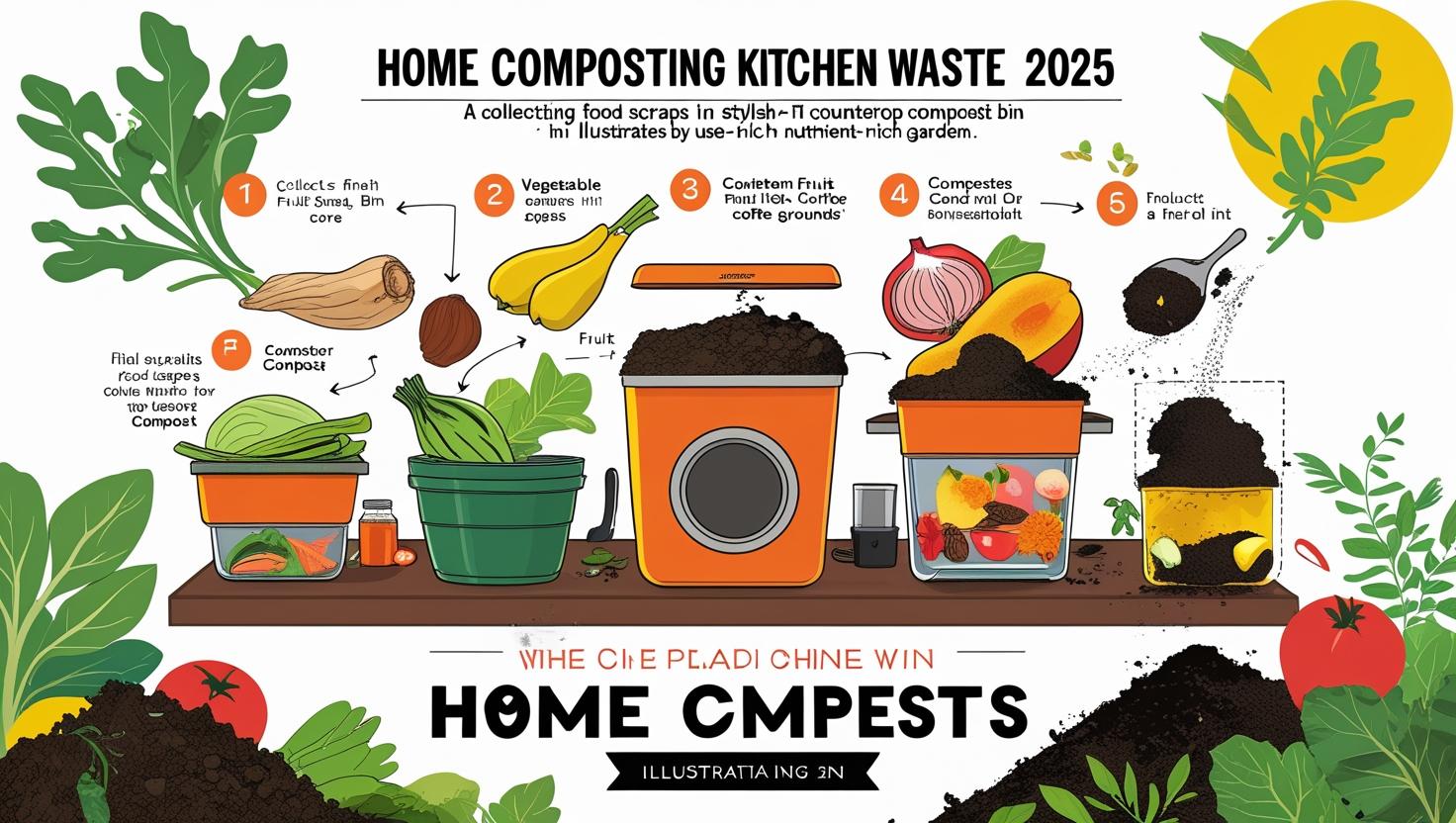
You don’t need a big garden or special skills to start composting. Here’s how to begin:
✅ Step-by-Step Composting Guide:
- Choose Your Bin
Pick a compost bin that suits your space—indoor, outdoor, or electric. - Collect Green Waste (Nitrogen-rich)
- Vegetable peels
- Fruit scraps
- Coffee grounds
- Tea bags
- Add Brown Waste (Carbon-rich)
- Dry leaves
- Newspaper
- Cardboard pieces
- Sawdust
- Avoid These Items
- Dairy, meat, oily food
- Plastic, glass, chemicals
- Turn the Pile (if using outdoor bin)
Mix the compost every few days to increase airflow and decomposition speed. - Wait and Use
In 4–8 weeks, your compost will turn dark, earthy, and crumbly—perfect for gardens, potted plants, and lawns.
Pros and Cons of Kitchen Composting
| Pros | Cons |
|---|---|
| Reduces environmental footprint | Takes time to break down |
| Produces natural fertilizer | May produce odor if not managed |
| Saves money on chemical fertilizers | Needs regular maintenance |
| Easy to start at home | Not all foods can be composted |
❓ Frequently Asked Questions (FAQ)
Q1: What type of kitchen waste can I compost?
A: You can compost fruit scraps, vegetable peels, coffee grounds, tea bags, eggshells, and dry leaves. Avoid dairy, meat, and oily foods.
Q2: Is indoor composting smelly?
A: Not if done right. Use bins with carbon filters or ventilation, and maintain the right green-to-brown balance to prevent odor.
Q3: Can I compost in an apartment?
A: Absolutely! Use electric composters or small countertop bins designed for indoor use.
Q4: Where can I buy compost bins in Bangladesh?
A: You can find compost bins on Daraz, Evaly, or local eco-stores. Some garden shops also offer composting kits.
Conclusion
Composting kitchen waste is one of the easiest and most rewarding ways to make your home eco-friendly. Not only does it reduce your garbage, but it also nourishes your garden and helps protect the planet.
Whether you’re a beginner or a gardening pro, there’s a composting solution for you.